
|
|
A description of the history of Barberton Mpumalanga South Africa, and the history of Barberton, with types of accommodation, restaurants, entertainment and tourist attractions and geological "greenbelt" information
Compiled by Louis-John Havemann
I have used among others the author T.V.Bulpin's writings in no small measure to compile this summary
Barberton is a town in Mpumalanga South Africa that is renowned for its historical significance. Once the scene of a hectic gold rush, it now hosts many tourist attractions of an historical nature.
There are many varied types of accommodation in Barberton, ranging from b & b accommodation, to self catering accommodation, to luxury lodges and hotels, to exclusive game lodges and game reserves. The warm hospitality of Barberton's varied accommodation makes for a rewarding stay.
The Barberton Daisy was discovered in 1884 in Barberton by Robert Jameson, after whom it is named: Gerbera Jamesonii.The legendary barmaid Cockney Liz suggested that it be called the "Barberton Daisy"


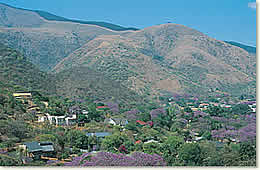

VERY EARLY BARBERTON
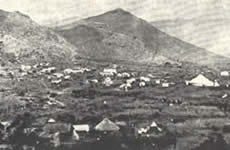
Barberton was founded in 1884 by the two Barber brothers Fred and Harry and their cousin Graham Barber, from Natal, who found what they called Barber's Reef - a reef so rich that it glittered with gold.
Henry Mitford later changed his surname to Barberton.
A great rush of diggers arrived on the scene and a hotchpotch of shacks, stores and canteens sprang up. On June 1884 David Wilson, mining commissioner of the De Kaap Valley, broke a bottle of gin, champagne being unavailable, over a lump of rock to christen the town, thus launching it on a lively career.
Tom McLachlan first discovered gold in the Kaap Valley in January 1874. It was not economically viable but he stated that if prospected properly then, he believed rich deposits would be found
The speed with which the town of Barberton grew was astonishing. During 1886 Barberton was at the height of its boom. Two stock exchanges traded night and day. Dozens of canteens, liquor shops and music halls competed with the mines to make the greatest profits in town.
Gold was found on the farms Ameide and Oorschot, three to five miles west of the present town of Barberton, forming part of the block of 13 farms constituting "Moodie's" concession - given to him by the Transvaal government for his work surveying a railway route from Delagoa Bay, now Maputo, to Pretoria. The Transvaal government had no money to pay Moodie so he was given 13 farms for his efforts
Henry (Harry) Mitford Barberton Graham Hoare Barber Fred H. Barber
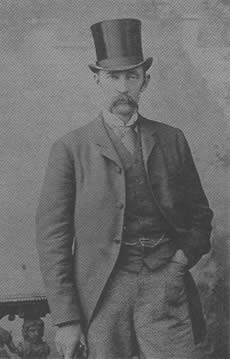
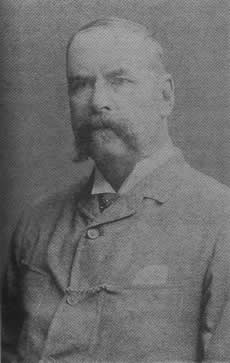
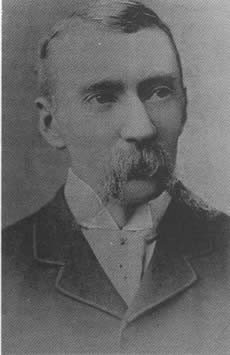
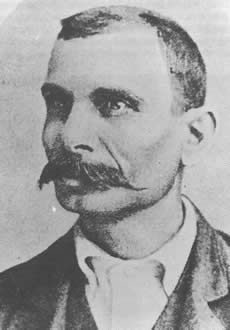
Auguste Robert known as "FRENCH BOB", discovered gold on the North Kaap River and pegged the first claims at what became James Town in "The Valley of Death" in 1883, this led to the Barberton gold rush.
James Town was named after Ingram James who was the first person to discover alluvial gold in the Noord Kaap River " French Bob" approached Moodie for the right to mine under special privilege as discoverer, which Moodie had no right to grant. He was willing to trade fairly with "French Bob" , but from the other diggers he claimed high licence fees and royalty on gold won. In terms of the Gold Law any licence's were payable to the state and the owner was entitled to half of such licence moneys.The diggers rightly refused to pay licence's and royalty to Moodie, and also refused to quit working. An impasse ensued and Moodie commissioned Henry Nourse to act on his behalf. Nourse arrived, but on his way met Fred and Henry Barber and their cousin Graham, all experienced hunters, with a party en route to the hunting veld.
They decided to go with Nourse. The diggers,under the leadership of Henry Culverwell, refused to pay Moodie anything but also refused to quit. Eventually Culverwell and 28 others were arrested and taken to Pretoria where they were charged and acquitted, but Moodie obtained an interdict against them and they had to cease work. Moodie however, had to realize that he himself had no right to mine or permit mining, and it was not until August 1885 that he got a mining concession. Eventually all the 13 farms of Moodie's Concession were brought within the Zuidkaap Goldfields on 28th May 1889.
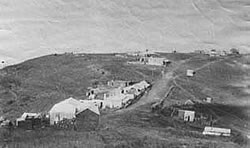
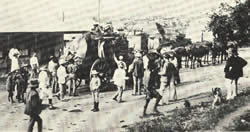
THE ARRIVAL OF THE POST COACH 1890
Meanwhile, the Barber brothers tried their hands at prospecting,and found payable gold in a creek close to the northern boundary of the Moodie's Concession farm, Brommers, immediately above the present town of Barberton. A gold rush followed, and Barber's Camp became a hive of activity. A Diggers Committee was formed. Other towns sprang up, such as , Eureka City. At the height of the rush, Eureka City had a population of 650 men and a handful of women.It was soon even wilder and more lawless than Barberton! It had three hotels, about a dozen canteens, a race track, music hall and some of the flashiest barmaids in the De Kaap Valley. Too much money was spent with too little profit to show for it. Fraud abounded as thousands of shares were sold in bogus companies.The very richness of the reefs and the presence of two stock markets carried future doom. Within a matter of months the mining operations were hopelessly overcapitalised. Meanwhile the gold rush in the Witwatersrand started and disappointed prospectors started leaving Barberton and Eureka City for richer fields. One by one the bars, gambling dens, music halls, and the two stock exchanges closed down. Barberton became virtually a ghost town and Eureka City was abandoned Some companies like Sheba remained and carried Barberton through this difficult period. Eureka City's ruins lie high in the hills on the north eastern side of the De Kaap Valley. A track from Barberton takes visitors to the site, but there is not a single inhabitant. .
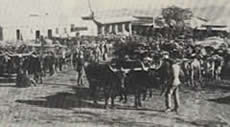
THE MARKS AND LEWIS BUILDING
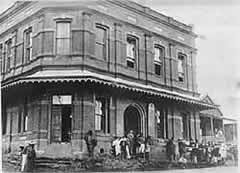
The Market Square was the centre of the town's life. Farmers would come to town spend the night, sell their produce the next day and then leave. Their wagons were left unattended when they were in town and it was accepted that anything on the wagons was safe. Goods started disappearing and soon the culprit, a Chinaman, was caught stealing. He was dragged to a Marula tree and hanged by his neck. Pat Murphy the local policeman rushed to the scene and cut him loose The Chinaman fled and was never seen again in Barberton. Places of historical interest in Barberton include the Lewis and Marks Building, the first double storey structure in Transvaal. The Gold Stock exchange 1887), Fernlea House (1893), Belhaven and Stopworth House (1886). The Barberton Museum, on Pilgrim's Street, houses displays excellent exhibits on aspects of early life in Barberton.
COCKNEY LIZ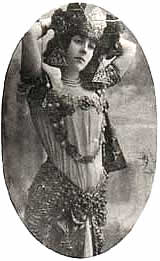
This photo which for many years was thought to be her, is in fact a photo of an actress playing the part of Cockney Liz in a play in 1926. Barmaid beauties such as Florrie,Trixie the "GOLDEN DANE" and "COCKNEY LIZ" were the centre of a wild and hectic night life. Cockney Liz's favourite trick that brought her fame was to parade on a billiard table before her customers and would then put herself up for auction to the highest bidder. One successful bidder bid 96 Kimberley Imperial Gold Mining Company shares valued at £805. He over celebrated his good fortune and passed out alone on the bar floor.He did not get his shares back. Liz was the talk of the town and her hairstyles were copied by many young teenage girls, much to the consternation of their mothers. Liz got married to Alfred Scribbens, was forced into adultery and paying bribes to keep information from her husband When the truth came out, she was divorced and died in Cape Town and was buried in a pauper's grave in Maitland Cemetery.
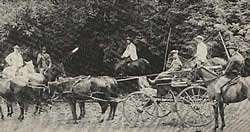
The stage carrying pay to the Sheba Mine was robbed of 4000. This was made up of gold and silver coins The stage was straining up the road in Elephants Kloof when it was held up by two armed men. They tied up the driver and his assistant, cut the horses loose and shot them. The two robbers then left with the money. They cached the silver and took only the gold. To this day the silver has never been recovered and no trace of it has ever been found. It was not far from this point in 1899, that a certain Mr. Edwards shot the last elephant seen in Elephants Kloof..
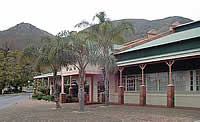
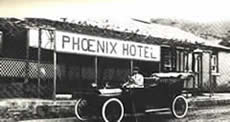
The small town of Barberton offers a surprising variety of restaurants and entertainment. Well worth a visit are the old mines, the beautiful scenic drives and the museum. Barberton, in Mpumalanga Province of South Africa, is often called the "Jewel of Lowveld". Though surrounded by the Mkonjwa Mountains, the town itself is just 877m above sea level and offers a very beautiful scenic view to all tourists. This town is older than the city of Johannesburg. There is an interesting museum in Barberton depicting the history, GEOLOGY and archeology of the Barberton area. The Bulembu Pass, a short distance south of town is one of the most outstanding scenic routes in Mpumalanga. Something of interest in the Barberton area is the Barberton Indigenous Tree Park, where about 100 species of trees grow. The park is traversed by the Fortuna Mine Trail, a circular walk of 2 km, which should not be missed.
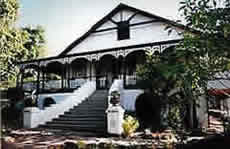
Belhaven House, Lee Road.
Belhaven, built in 1904, is an example of a pre-fabricated house with corrugated iron outer walls and pressed iron panels on the interior. It is furnished in the style of the late Victorian and early Edwardian periods, and depicts the lifestyle of a wealthy middle class family.
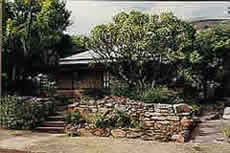
Stopforth House, The original house and outbuildings were constructed in 1886 by James Stopforth, a Baker and General Dealer, originally from England, and later from Pilgrims Rest. In 1892 the house was rebuilt. It was occupied by the Stopforth family from 1886 until 1983 and is furnished with the original furniture and household articles used by the Stopforth family between 1886 and 1914 Photos and information by courtesy of www.barberton.info/museum_house.htm and Barberton Museum
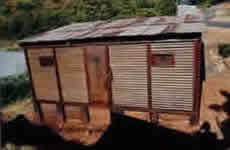
Blockhouse, corner of Judge and Lee roads.
The fort dates from 1901, and is an example of the earliest design of the blockhouse constructed by the British in South Africa. During the time of the Anglo-Boer war the British built it as a position of defense against the Boer forces. It was manned by the Barberton Town Guard which consisted of local volunteers under the command of J W Winter.
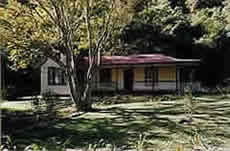
Fernlea House, Lee Road. This wood and iron house was built for Mrs. Emily Fernandez in the early 1890's. She married Mr. Thomas Lee, who had a Photography and Drapery Business in Barberton. The building now houses an exhibition mainly about Rimers Creek and the restoration of the building.
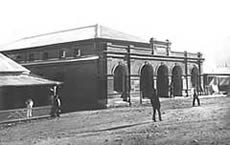
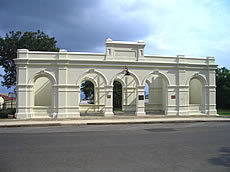
The first stock exchange was built on the corner of Market Square, and was later destroyed by fire. The De Kaap Exchange, a brick building, the second Stock Exchange in the Transvaal, was built in Pilgrim Street. Only the facade (Right) remains today and it is a national monument. Photo left and information by courtesy of www.barberton.info/museum_house.htm and Barberton Museum.
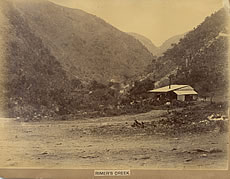
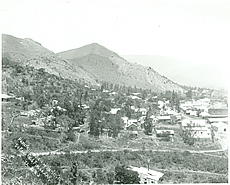
Rimers Creek is a very sensitive historic area. It was named after James Cook Rimer whose party also discovered the Umvoti Reef below the Barber’s Reef. It is the site of the original gold discovery in 1884 by the Barber family after whom Barberton was later named. It was previously known as the Umvoti Creek. It also is the site of old historic mines, coco pan routes, a cable way and the Central Mill where the ore was crushed. This Central Mill stood in the centre of Rimers Creek site.
Near the site is the British blockhouse, Fernlea House, Belhaven and many other historic buildings. Rimers Creek is Part of the historic district of Barberton. Rimers Creek is being threatened by development and an ongoing legal battle is being fought for the protection of this Heritage site.
SIR PERCY FITZPATRICK
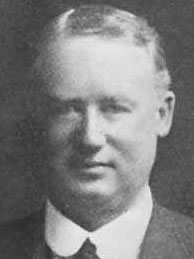
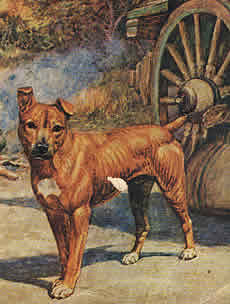
Barberton was for some years, the home of Percy Fitzpatrick, the author of the classic book, "Jock of the Bushveld". Sir Percy Fitzpatrick wrote Jock of the Bushveld in Europe in 1905 while recuperating from a persistent illness he had first contracted in Pretoria Central Prison, where he had been incarcerated for his role in the Jamison Raid and Reform Committee against the Transvaal Republic. In front of the town hall of Barberton is a bronze statue of "Jock of the Bushveld". The lounge of the Impala Hotel has a "Jock of the Bushveld" frieze. Sir Percy Fitzpatrick worked as a "Transport Rider" through the Lowveld, along the Old Delagoa Road, which was used between May and September (the dry disease-free winter months) by transport riders from the Lydenburg Goldfields (Spitzkop, Mac Mac, Pilgrim’s Rest and Lydenburg and Barberton) to Delagoa Bay, then Lourenco Marques now Maputo. It was this route that served as the setting for many of Jock’s adventures. This road, known as “The Old Transport Road” dated back to 1844 when Andries Potgieter and a party of Boer horseman were tasked with finding a practical route between the Ohrigstad area and the port city of Delagoa Bay. The book tells of the adventures that immortalised Jock of the Bushveld as a legend of the Lowveld. Picture by Edmund Caldwell
THE SHOCKING AND NEVER-ENDING RIMER’S CREEK SAGA AS AT NOVEMBER 2016
1 The site of the Central Mill in Rimer’s Creek, Barberton, was recently included on the list of the TOP TEN MOST ENDANGERED CULTURAL HERITAGE SITES IN SOUTH AFRICA. This followed a Call for Submissions from the Heritage Monitoring Project (HMP) in June 2016 and the Rimer’s Creek Interested and Affected Parties (I&APs) were delighted when their submission was included. Copy and paste the Heritage Portal site address below for further information and the Top Ten List.
http://theheritageportal.co.za/article/our-vanishing-heritage-south-africas-top-ten-endangered-sites-2016
2 The HMP is a civil society initiative to monitor and report on heritage law reform and enforcement, monitoring and evaluation that provides an independent voice for tracking progress of the realization of heritage and cultural rights in South Africa. The HMP’s mission is to strengthen transparency, accountability and responsible custodianship across the heritage sector which is done in collaboration with heritage bodies working across a wide range of disciplines.
3 This campaign is an annual initiative of the HMP and the Heritage Association of South Africa to identify and raise awareness of cultural heritage sites that are at significant risk from natural or manmade forces.
4 Rimer’s Creek (originally known as Umvoti Creek) is the historical heart of Barberton and considered sacrosanct by the local community. It is where Barberton began and there is no more important site related to Barberton’s origins. It is the place where the Barber brothers Fred and Henry and their cousin Graham discovered the Barber Reef in 1884 which led to a gold rush. Shortly thereafter the Rimer Brothers, James Cook and Richard Guy discovered the Umvoti Reef. The Central Mill is where the ore from their early workings was crushed and where the first ore from the historic Sheba Gold Mine was sent by Edwin Bray in 1885. The mill was owned by a syndicate to which the Rimers and Barbers belonged and was the nucleus around which Barberton developed. Rimer’s Creek is also the place where Barberton was born in 1884 when David Wilson, the Mining Commissioner, broke a bottle of gin on a rock and christened the town Barberton after the Barbers. There was apparently a choice between Barberton and Rimerton but as there were more Barbers than Rimers the vote went in favour of Barberton. However, to perpetuate the Rimers’ association with the area the Umvoti Creek was renamed Rimer’s Creek.
5 Despite the above the site is under serious threat and I&APs who have battled for nine years to prevent the rezoning to accommodate a heavy load truck parking lot have welcomed this decision because the historical significance – which has simply been denied by the developer and ignored by the municipality - has now been confirmed by an expert panel of judges. A Heritage Impact Assessment conducted several years ago recommending that the proposed development be rejected and the area be rehabilitated – supported by the Mpumalanga Heritage Resources Authority (MHRA) – was also ignored by the Developer and Umjindi Local Municipality (ULM)and swept under the carpet by the Mpumalanga Dept of Agriculture, Rural Development, Land and Environmental Affairs (MDARDLEA). I&APs also hope that inclusion on this list will highlight a process they believe was flawed from the outset and which has been brought to the attention of the Public Protector.
6 The current position is that the site is now completely walled in and instructions to stop from both the MHRA and the Inkomati Catchment Management Agency in February and March 2016 had no effect. A massive Berlin type wall – over 5 metres high in places - has also been erected in sections of the stream bed to accommodate the heavy load trucks and the entrance to where Barberton began is now denied to the community.
7 However, I&APs maintain that things are far from over and an Appeal has been lodged against the rezoning proclamation that appeared in the Provincial Gazette on 22 July 2016 -when the wall was almost complete - and a hearing is awaited. I&APs also allege that no attempts were made by ULM to notify them of this notice – despite an undertaking that they would and a written request from Town Planners acting on their behalf specifically requesting to be notified. Had had this notice not been spotted it could have all been over but it was seen and I&APs remain confident that justice will prevail.
MARJORIE NUNS
On behalf of the joint Appellants / Major I&APs, viz. the Umjindi Environmental Committee / Barberton / Umjindi Ratepayers Association / Mr Chris Rippon – Sheba Historical Society - on behalf of petitioners
NO COMMISSION PAYABLE ON BOOKINGS!!
WANT TO ADVERTISE WITH US? Contact judy: judy@haps.co.za